Latest News

Latest News

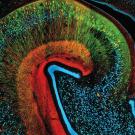
Modeling Brain Wiring in Whisker Barrels

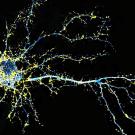
It’s been estimated that a human brain contains 100 trillion connections between some 100 billion neurons. How is such a monstrous wiring job accomplished? One possibility is that there is a complete wiring plan encoded in our genes. But another explanation is that the initial genetic plans are simple, and complexity arises from relatively simple interactions between growing cells.

Making and breaking connections in the brain

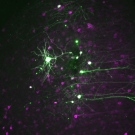
Making and breaking connections in the brain The links between nerve cells, called synapses, allow us to learn and adapt, and hold clues to conditions such as autism, schizophrenia and more

If you were to take a human brain and toss it in a blender — not that you should — the resulting slurry of cells wouldn’t be special in the way that the human brain is. No thoughts, no worries, no wonder or awe.

New Insight on Maternal Infections and Neurodevelopmental Disorders

The immune responses of a female mouse before pregnancy can predict how likely her offspring are to have behavioral deficits if the immune system is activated during pregnancy, according to researchers from the Center for Neuroscience at the University of California, Davis.

The Brain Detectives: UC Davis Neuroscientists Investigate The Brain to Solve The Mysteries of Mental Health

The Brain Detectives: UC Davis Neuroscientists Investigate The Brain to Solve The Mysteries of Mental Healthby Greg WatryScientists are sleuths and sometimes in a research case, the tiniest biological clues lead to big breakthroughs. To understand how we function, we first need to understand our building blocks.

Take the human brain. As the source of consciousness, this three-pound organ, composed of roughly 86 billion neurons, holds the keys to understanding the human condition, both in its healthy and diseased states.

CNS Video!!

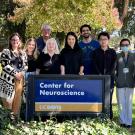
Learn more about the Center for Neuroscience and how brain research improves lives.


Facilties Management Customer Spotlight: Lisa Laughlin

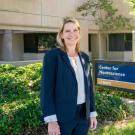
It’s never a dull day at UC Davis for Lisa Laughlin! As the Safety and Facilities Manager for the Center for Neurosciences Campus, Lisa spends her time making sure all buildings are safe and sound.

While working at the Center, Lisa oversees various environments. From wet and dry labs, cognitive computational system labs and tissue culture labs, to vivarium spaces, study rooms and office spaces, Lisa makes sure all areas are secured. She is also tasked with making sure accessibility is closely monitored as certain areas are restricted.

UC Davis Center for Neuroscience Gains Presidential Chair

(DAVIS) Mental health research at the University of California, Davis, has received dedicated endowed support thanks to Bryan Cameron ’80, director of research and senior vice president at Dodge & Cox Investment Managers.

Cameron, a member of the UC Davis Chancellor’s Board of Advisors, gave a $1.5 million gift, to which the UC Office of the President added $500,000, to establish the C. Bryan Cameron Presidential Chair.

Perception Inception: Exploring How the Brain Makes Up the World with New Faculty Rishidev Chaudhuri

The world is made of matter, but between those particles are empty spaces, which paradoxically account for the majority of our perceived, concrete universe.

“This table feels hard,” said Assistant Professor Rishidev Chaudhuri, who sat in his office at the UC Davis Center for Neuroscience. “That’s something that emerges at the collective population level.”

How individual particles come together to spontaneously create new structures is a question pondered by many physicists. The concept underlying that question—collective behavior—also intrigues neuroscientists.

David Amaral of UC Davis Health elected to the National Academy of Medicine

David Amaral, distinguished professor and Beneto Foundation Chair in the Department of Psychiatry and Behavioral Sciences and the MIND Institute, has been elected to the prestigious National Academy of Medicine.

An autism expert, Amaral joins an elite group of physicians and scientists in the National Academy of Medicine. Only 100 new members are elected each year from the U.S. He is one of 13 UC Davis faculty members who have been elected to the Academy since its founding in 1970 and the only one from UC Davis elected this year.

Maternal infection may accelerate expression of autism genes

Maternal infection may accelerate expression of autism genes

This article originally appeared on the Spectrum site.

Exposure to infection in utero may speed up the expression of many genes linked to autism — and hasten changes in brain anatomy.

The results are in mice but hint at how infections during pregnancy may contribute to autism.

Discovering Curiosity: Brain Puzzles with UC Davis Center for Neuroscience Director Kimberley McAllister

Puzzles always fascinated UC Davis Center for Neuroscience Director Kimberley McAllister. They’re initially what attracted her to science.

Raised in rural northern Virginia, McAllister enjoyed exploring the woods with her sister and dogs. She developed an avid interest in botany and ornithology, intrigued by the complexities of the natural world. She wanted to figure out answers to nature’s mysteries.  Eventually, McAllister’s ambition drew her to one of the most complex puzzles in the universe: the human brain.