Latest News

Latest News

How Psychedelics Could Help Treat Depression with Neuroscience Ph.D. Student Lindsay Cameron

How Psychedelics Could Help Treat Depression with Neuroscience Ph.D. Student Lindsay Cameron

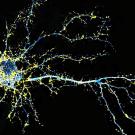
Ask most people about the neurochemical origins of depression and you’ll likely hear how low serotonin levels are the cause. But today’s scientists know depression’s roots are more tangled and complex. One area of interest to them is the brain’s prefrontal cortex, a region responsible for motivational and goal-directed behavior. For those with depression, this region’s neurons are unhealthy, their connections, called synapses, withering like rotten roots.

Mark Goldman appointed to Joel Keizer Endowed Chair in Theoretical and Computational Biology

An advocate for computational and quantitative biology, CNS faculty member Mark Goldman has been appointed to the Joel Keizer Endowed Chair in Theoretical and Computational Biology. The position honors the late Professor Joel Keizer, a pioneering UC Davis faculty member and theoretical biologist who spent 28 years on campus. He died on May 16, 1999 from lung cancer at the age of 56.

CNS Affiliate Wilsaan Joiner: Exploring sensory inputs and motor actions

Wilsaan Joiner, PhD, recently joined the UC Davis neuroscience community as an assistant professor in the Department of Neurobiology, Physiology and Behavior and School of Medicine’s Department of Neurology. Joiner is particularly interested in how sensory inputs guide our motor actions and vice versa; for example, how ballet dancers possess a precise sense of where their bodies are in space and how they make very fine body movements.

Cameron Carter: a UC Davis Most-Cited Researcher

Cameron Carter, MD, professor of Psychiatry and Behavioral Sciences and former director of the Center for Neuroscience, is one of 19 researchers from the University of California, Davis, named in the annual Highly Cited Researchers 2018 list released by Clarivate Analytics. The list identifies exceptional scientists and social scientists who have demonstrated significant influence by publishing multiple papers that rank in the top 1 percent by citations in a particular field and year, over a 10-year period.

Exploring Vision, Perception and Behavior: W. Martin Usrey Named Barbara A. Horwitz and John M. Horowitz Endowed Chair in Physiology

Recently, the UC Davis College of Biological Sciences named Professor W. Martin Usrey, a neurobiologist interested in the physiology of vision, to the Barbara A. Horwitz and John M. Horowitz Endowed Chair in Physiology. Usrey, who is the chair of the Department of Neurobiology, Physiology and Behavior and a faculty member of the Center for Neuroscience,  will hold the appointment for five years. The endowment will support his research, teaching and service activities.     

New brainwave device shown to boost memory performance

Researchers have revealed a new brainwave device that supposedly boosts our ability to remember significantly more information.

A device that gives us a significantly enhanced memory has long been a trope of science fiction, and perhaps the dreams of many a student. Now, researchers at University of California, Davis, have revealed a somewhat similar device that enhances brainwaves crucial to our ability to recall information.

Read Article

UC Davis neuroscientists advance learning and memory research to decode how our brains work

UC Davis neuroscientists advance learning and memory research to decode how our brains workby David SlipherFor astrophysicists, the final frontier is outer space, but ask a neuroscientist, and the greatest quest for scientific exploration lies within your brain. 

Vastly more advanced than any supercomputer, the complexity and versatility of the human brain is awe-inspiring. Of all its abilities, learning from new experiences might be the most powerful and astounding feature. But how does learning occur? And how do we remember what we learn? 

The riddle of CHD8 haploinsufficiency in autism spectrum disorder

Autism spectrum disorders (ASDs) are a group of neurodevelopmental conditions defined by social and communication deficits accompanied by repetitive and stereotyped behaviors. The core symptoms of ASDs are rarely isolated and most often coexist with other conditions, such as intellectual disability and epilepsy. ASDs have a strong genetic basis as demonstrated by recurrence risk in families and twin studies. In recent years, genetic studies have identified several chromatin remodeling genes with causal roles in neurodevelopmental disorders

Why You Forget Names Immediately—And How to Remember Them

Of all the social gaffes, none is perhaps more common than meeting a new person, exchanging names and promptly forgetting theirs — forcing you to either swallow your pride and ask again, or languish in uncertainty forever.

Why do we keep making this mistake? There are a few potential explanations, says Charan Ranganath, the director of the Memory and Plasticity Program at the University of California, Davis.

Article