News

Researchers Temporarily Turn off Brain Area to Better Understand Function

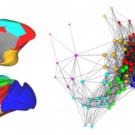
Capitalizing on experimental genetic techniques, researchers at the California National Primate Research Center, or CNPRC, at the University of California, Davis, have demonstrated that temporarily turning off an area of the brain changes patterns of activity across much of the remaining brain.

The research suggests that alterations in the functional connectivity of the brain in humans may be used to determine the sites of pathology in complex disorders such as schizophrenia and autism.

Hellman Fellows: Early-career faculty members get a boost

Vice Provost Maureen Stanton, who leads Academic Affairs, has named UC Davis’ newest class of Hellman Fellows — early-career faculty members chosen to receive financial support for their research and to assist them in making progress toward tenure. Center for Neuroscience faculty, Dr. Diasynou Fioravante is named one of 12 Hellman Fellows.

Article

Exercise is really, really good for your brain

Physical exercise is good for your brain. And I mean really good for it. The brain burns a ton of energy during exercise, much more, even, than if you were thinking really hard about something really complicated. New research has discovered just what the brain does with all that extra energy.

Memory reply prioritizes high-reward experiences

Why do we remember some events, places and things, but not others? Our brains prioritize rewarding memories over others, and reinforce them by replaying them when we are at rest, according to new research from the University of California, Davis, Center for Neuroscience, published Feb. 11 in the journal Neuron.

“Rewards help you remember things, because you want future rewards,” said Professor Charan Ranganath, a UC Davis neuroscientist and senior author on the paper. “The brain prioritizes memories that are going to be useful for future decisions.”

Fioravante, Nord and Gray received NARSAD Young Investigator Awards

The UC Davis Center for Neuroscience continues to attract the brightest, most innovative young investigators. All three of its new junior faculty, Drs. Fioravante, Nord and Gray were recognized with a NARSAD Young Investigator Award, a Brain & Behavior Research Foundation grant providing two-year awards of up to $70,000 to support the most promising young scientists conducting mental health research in the world. 

Article not available

Ranganath, Wiltgen and Antzoulatos authored three of top 10 Neuron publications of 2014-2015

Each year, Neuron celebrates the top 10 groundbreaking research papers selected by its high-achieving scientific editors and readers communities.  In the latest Best of Neuron, 2014-2015, UC Davis Center for Neuroscience research projects by Drs. Wiltgen, Ranaganath and Antzoulatos were named among the top 10.

High impact and prestigious scientific journal of neuroscience, Neuron is a biweekly peer-reviewed publication of Cell Press.