News

Manipulating memory with light

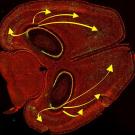
Just look into the light: not quite, but researchers at the UC Davis Center for Neuroscience and Department of Psychology have used light to erase specific memories in mice, and proved a basic theory of how different parts of the brain work together to retrieve episodic memories. The work was published Oct. 9 in the journal Neuron. 

Article

Multiple interacting brain areas underlie successful spatiotemporal memory retrievals in humans

Emerging evidence suggests that our memories for recent events depend on a dynamic interplay between multiple cortical brain regions, although previous research has also emphasized a primary role for the hippocampus in episodic memory. In this Nature Scientific Reports article, Center for Neuroscience faculty, Arne Ekstrom and  graduate students identify and describe network interactions that mediate spatiotemporal memory retrieval.

Article

Protein is key to forming short-term memories

Short-term memory is essential for everyday life — whether remembering a phone number while dialing, carrying on a conversation, or forming the basis of long-term memories. Neuroscientists think that short-term memory is based on changes in both the properties of brain cells and the connections, called synapses, between them.

Article

Memory researcher wins Pentagon grant

Congratulations to Professor Charan Ranganath of the UC Davis Center for Neuroscience and Department of Psychology on his selection as a National Security Science and Engineering Faculty Fellow by the U.S. Department of Defense. The five-year, $2.6 million fellowship will support new work on learning and memory in Ranganath’s Dynamic Memory Laboratory at UC Davis.