Learning and Memory

Manipulating memory with light

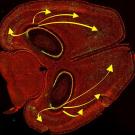
Just look into the light: not quite, but researchers at the UC Davis Center for Neuroscience and Department of Psychology have used light to erase specific memories in mice, and proved a basic theory of how different parts of the brain work together to retrieve episodic memories. The work was published Oct. 9 in the journal Neuron. 

Article

Protein is key to forming short-term memories

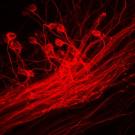
Short-term memory is essential for everyday life — whether remembering a phone number while dialing, carrying on a conversation, or forming the basis of long-term memories. Neuroscientists think that short-term memory is based on changes in both the properties of brain cells and the connections, called synapses, between them.

Article

What happened when? How the brain stores memories by time

Before I left the house this morning, I let the cat out and started the dishwasher. Or was that yesterday? Very often, our memories must distinguish not just what happened and where, but when an event occurred — and what came before and after. New research from the University of California, Davis, Center for Neuroscience shows that a part of the brain called the hippocampus stores memories by their "temporal context" — what happened before, and what came after.

Article

Guggenheim Fellowship for Memory Researcher

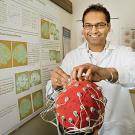
Charan Ranganath got into memory research to help people with brain damage due to Alzheimer's disease, trauma or other causes. That work has now earned Ranganath, a professor in the Department of Psychology and Center for Neuroscience at the University of California, Davis, a $40,000 fellowship from the John Simon Guggenheim Memorial Foundation, one of 175 awarded to scientists, artists and scholars by the foundation this year.

Article